
A passenger stands in the security queue with a new power bank in his carry-on. The case says, proudly: 20,000 mAh. In his pocket sits a phone with a 5,000 mAh battery. The arithmetic looks trivial — twenty thousand divided by five thousand is four full charges, enough for the whole transatlantic flight.
The security officer picks up the device and pays no attention whatsoever to the big advertising number. He turns the power bank over and hunts for a tiny marking on the underside: a figure given in watt-hours. If he cannot find it, the device is not flying.
And a second disappointment waits on board. The phone will charge twice, and somewhere around fifty percent of the third attempt the power bank will die. There is no fraud here — only one of the most widespread misunderstandings in consumer electronics: confusing electric charge with energy. Two different physical quantities, measured in different units, fused by marketing into a single number on a box.
To untangle it, we have to start with the protagonist: charge itself, and the man who first learned how to measure it.
The balance that weighed the invisible
Electric charge is one of the fundamental properties of matter — the one that decides how strongly bodies interact through the electromagnetic field. The SI unit of charge is the coulomb (symbol C), named after the French physicist and military engineer Charles-Augustin de Coulomb (1736–1806).
Before Coulomb turned to electricity, he spent several years as an officer of the Corps of Engineers on Martinique, supervising the construction of Fort Bourbon. The tropics ruined his health but forged something more valuable: an obsession with friction and with precision of measurement. Back in France he faced the problem that was blocking the whole of contemporary electrostatics — how do you measure forces so faint that friction inside the instrument distorts the result more than the phenomenon itself?
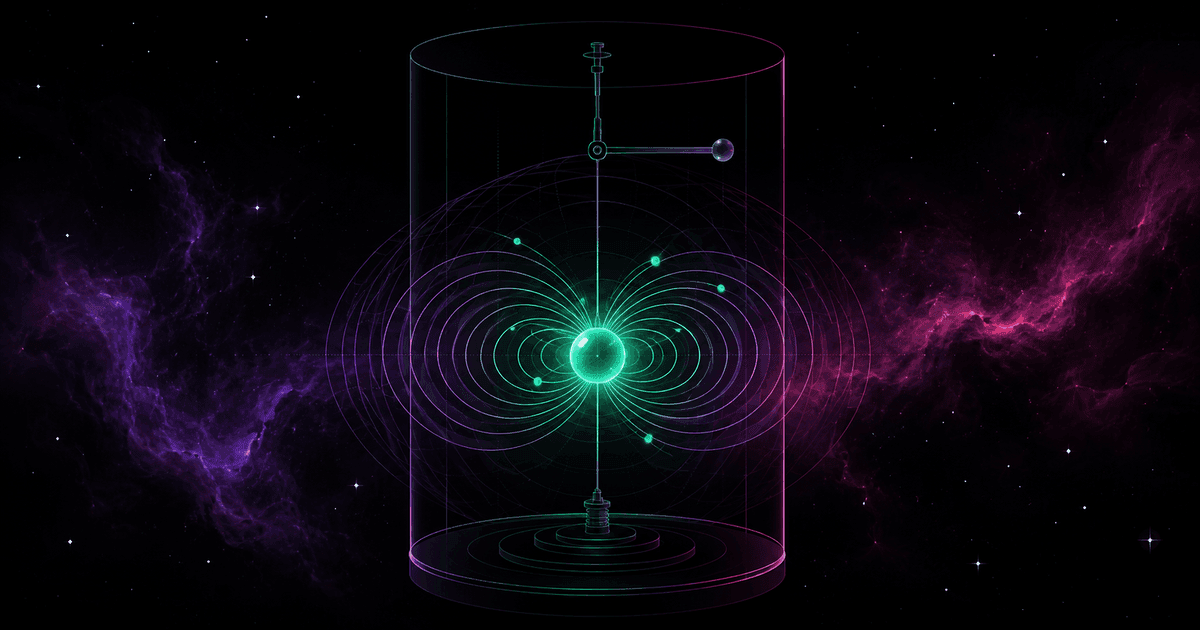
The answer was the torsion balance, presented in 1785. Coulomb eliminated axial friction by suspending a light rod from an extraordinarily thin silver wire. On one end of the rod he mounted a small conducting sphere, on the other a counterweight. When a second, charged sphere was introduced through an opening in the glass case, the electrostatic force rotated the rod and twisted the wire. The wire's torsional elasticity resisted until equilibrium was reached — and the angle of twist, read off a micrometer, was a measure of the force.
Those readings made it possible to formulate Coulomb's law: the force between two point charges is directly proportional to the product of the charges and inversely proportional to the square of the distance between them. A century later, at the International Congress of Electricians in Paris in 1881, Coulomb's name was permanently attached to the unit of charge.
The 2019 revolution: the ampere becomes hostage to the electron
For decades the coulomb was a derived unit in SI. Textbooks said: one coulomb is the charge that flows through a conductor's cross-section in one second at a current of one ampere. The ampere itself was defined by a thought experiment — two infinitely long, infinitely thin wires in vacuum, one metre apart, attracting each other with a force of exactly 2 × 10⁻⁷ newtons per metre of length.
Elegant on paper, nightmarish in the laboratory. Nobody has ever built infinitely long wires of zero cross-section, and measuring such faint magnetic forces carried substantial uncertainty. The standard depended on the limits of the apparatus.
On 20 May 2019, World Metrology Day, the redefinition of SI came into force. The units were anchored not in experiments but in physical constants with fixed, exact values. Charge was affected directly: the elementary charge e, the absolute value of the charge of an electron or a proton, became a defining constant:
e = 1.602 176 634 × 10⁻¹⁹ C — exactly, with no measurement uncertainty.
The dependency reversed. Today the ampere is defined through the elementary charge, not the other way round: one ampere is the current corresponding to the flow of exactly 1/(1.602 176 634 × 10⁻¹⁹) elementary charges per second. Inverting the equation gives the number of electrons in a single coulomb:
1 C ≈ 6.241 509 074 × 10¹⁸ electrons
That is roughly six quintillion electrons on the short scale. The unit of charge no longer depends on any object on Earth.
The scale of charge: from a doorknob to a lightning bolt
Intuition says that the spark jumping from your finger to a metal doorknob is a microscopic affair, and that lightning is an apocalyptic transfer of charge. The first half of that intuition is right. The second is surprisingly wrong.
When you shuffle across a synthetic carpet, friction strips electrons off and piles them onto your skin. Your body then behaves like the plate of a capacitor with a capacitance of about 100–250 picofarads. The voltage can climb to well over ten thousand volts — but the charge you hand to the doorknob is a mere one to five microcoulombs. (Check it yourself: 100 pF × 20,000 V = 2 µC.)
Lightning is a discharge inside a cloud polarised so that the negative charges gather at its base. An average negative cloud-to-ground stroke transfers on the order of 15 coulombs, at currents reaching thirty thousand amperes within a fraction of a second. The most powerful positive discharges reach 350 coulombs.
And now the comparison that breaks intuition. A smartphone battery rated at 4,000 mAh stores 14,400 coulombs of charge. That is nearly a thousand times more electrons than flow in a single stroke of lightning.
So why doesn't the phone explode? Because charge is not energy, and the drama is supplied by voltage and time. Lightning releases its fifteen coulombs under hundreds of millions of volts in microseconds — hence power measured in terawatts. The phone hands over its fourteen thousand coulombs across a dozen or more hours, at under four volts.
| Phenomenon / device | Charge [C] | In practical units |
|---|---|---|
| Spark on touching a doorknob | ~0.000002 C | ~2 µC |
| Average (negative) lightning stroke | ~15 C | ~4.2 mAh |
| Extreme positive lightning stroke | up to 350 C | ~97 mAh |
| AA alkaline cell | ~9,000 C | ~2,500 mAh |
| iPhone 15 battery | ~12,056 C | 3,349 mAh |
| Samsung Galaxy S24 battery | 14,400 C | 4,000 mAh |
| One 21700 cell from an EV pack | ~18,000 C | ~5,000 mAh |
| Car starter battery | 180,000 C | 50 Ah |
Why mAh rather than coulombs
If the coulomb is the official SI unit, why does the entire battery industry insist on counting in amp-hours and their thousandths? The reason is purely practical.
The user cares about one question: how long will this thing run? If a battery were labelled "14,400 C" and the phone drew 0.2 A, you would have to divide charge by current, get 72,000 seconds, and then convert that to hours by hand.
The amp-hour removes the chore, because by definition it ties current to time. The whole of the mathematics rests on an hour having 3,600 seconds:
1 Ah = 1 A · 1 h = 1 A · 3,600 s = 3,600 C
1 mAh = 0.001 A · 3,600 s = 3.6 C
So with a 4,000 mAh battery and a 200 mA draw, the runtime is immediately visible: 4,000 ÷ 200 = 20 hours. That convenience pushed the coulomb out of everyday technical language — even though both units measure exactly the same thing, and you can move freely between them in our electric charge converter.
Myth one: "20,000 mAh will charge a 5,000 mAh phone four times"
That sum assumes milliamp-hours may be divided without regard to the voltage. They may not.
The lithium-ion cells inside a power bank operate at a nominal voltage of about 3.7 V. A USB port delivers 5 V on its output (or 9, 12, even 20 V under fast-charging standards). For current to leave the power bank, the built-in boost converter has to raise the voltage. Energy does not multiply — if voltage goes up, charge must come down:
20,000 mAh × 3.7 V ÷ 5.0 V = 14,800 mAh
Merely matching the USB standard therefore costs 26% of the charge, before the phone is even connected. And that is the ideal case. Real converters manage 88–93% efficiency in good designs, and under 80% in budget ones. Take a decent 88%:
14,800 mAh × 0.88 ≈ 13,000 mAh
This is the rated capacity — the charge a power bank will actually deliver through its USB port. Reputable manufacturers print it in small type next to the big marketing number.
It gets better still. The cable eats another 3–8%, depending on the gauge of its copper, and the charging controller inside the phone, stepping 5 V down to the battery's voltage, loses a further 5–10% as heat. Fast charging at 9 or 12 V runs hotter yet and can drag the efficiency of the whole chain down to 60–70%.
Add the losses up, and a 20,000 mAh power bank will charge a phone with a 5,000 mAh battery between 2.5 and 2.9 times — never four.
Myth two: "mAh is a unit of energy"
This is a category error, repeated even by hardware reviewers. The milliamp-hour measures charge, that is, a number of electrons. Energy requires the voltage at which those electrons are pushed into the circuit. It is measured in watt-hours:
Energy [Wh] = Capacity [mAh] × Voltage [V] ÷ 1000
Compare two batteries. The first sits in a power bank: 10,000 mAh at 3.7 V, which is 37 Wh. The second powers a professional camera or a drone: only 5,000 mAh, but its cells are wired in series to 14.8 V, giving 74 Wh.
The drone battery has half the capacity in mAh, yet stores twice the energy and will do twice the work. Comparing batteries of different voltages by their milliamp-hours alone is physically meaningless. If you want an honest comparison, convert to watt-hours.
Myth three: "airlines limit power banks in mAh"
Travellers pass around a rumour about a ban on power banks "over 20,000 mAh". In fact, IATA and FAA rules do not recognise the mAh at all. Only watt-hours count.
The reason is fire. A damaged or defective lithium-ion cell can enter thermal runaway — a self-sustaining temperature rise that ends in ignition. The violence of such a fire depends on the stored chemical energy, not on the number of electrons. Hence the three-tier classification in the IATA Dangerous Goods Regulations:
- up to 100 Wh — permitted in carry-on baggage with no need to notify the carrier;
- 101–160 Wh — requires prior approval from the airline, usually a maximum of two units per passenger;
- above 160 Wh — forbidden in the cabin and in checked baggage; carried only as certified cargo.
Where does our power bank land? 20,000 mAh × 3.7 V ÷ 1000 = 74 Wh. Comfortably inside the safest tier. And now it is clear why the market is full of models with the odd capacity of 26,800 mAh — that is 99.2 Wh, the maximum that still slips under the 100 Wh line.
Two things are worth remembering. First, a power bank counts as a spare battery, so it cannot go into the hold — in a cargo-bay fire the crew would have no way to put it out. Second, a growing number of carriers forbid charging a power bank in flight and require it to be kept in sight rather than in the overhead bin. Check your airline's rules before you fly, because they differ from carrier to carrier.
The golden 0.65 rule
A conscientious manufacturer prints the rated capacity at 5 V on the case. A line reading "Rated Capacity: 13,000 mAh @ 5V" underneath a big "20,000 mAh" is a good sign — it points to high efficiency and an honest conversion. Its absence suggests the opposite.
When the marking is missing, one heuristic suffices: multiply the nominal capacity by 0.65. The factor absorbs both the voltage conversion and the usual losses in the converters, the cable and the charging controller.
| Nominal capacity | Cell energy (at 3.7 V) | Real output charge (×0.65) | Charges of a 5,000 mAh phone | Charges of a 3,350 mAh phone |
|---|---|---|---|---|
| 5,000 mAh | 18.5 Wh | ~3,250 mAh | 0.65 (a top-up only) | 0.97 (almost full) |
| 10,000 mAh | 37 Wh | ~6,500 mAh | 1.3 | 1.9 |
| 20,000 mAh | 74 Wh | ~13,000 mAh | 2.6 | 3.8 |
| 26,800 mAh | 99.2 Wh (just under the cap) | ~17,420 mAh | 3.5 | 5.2 |
Physics does not lie; labels merely leave things out
By printing "20,000 mAh", the manufacturer tells the truth — that really is the charge the cells hold at their own 3.7 V. It simply omits that the charge will reach your phone only after passing through two converters, a cable and a charging controller, each of which collects its tax in heat.
The coulomb and the milliamp-hour count electrons. The watt-hour counts the work those electrons can do. As long as we confuse the two, power banks will keep disappointing us and aviation rules will look arbitrary. Once we separate them, everything falls into place: 74 Wh in your pocket, two and a half phone charges, and a calm walk through security.
Further reading
- BIPM, The International System of Units (SI Brochure), 9th ed. (2019) — the official definitions of the ampere and the elementary charge.
- Główny Urząd Miar, Redefinicja Międzynarodowego Układu Jednostek Miar SI (gum.gov.pl) — a Polish account of the 2019 changes.
- NIST, Reference on Constants, Units, and Uncertainty: elementary charge (physics.nist.gov/cuu) — the value of
eand its status as a defining constant. - IATA, Passengers Travelling with Lithium Batteries (iata.org) — the binding 100 Wh and 160 Wh thresholds.
- FAA, Batteries Carried by Airline Passengers — FAQ (faa.gov) — the American counterpart of the rules.
- National MagLab, Charles-Augustin de Coulomb and Torsion Balance – 1785 (nationalmaglab.org) — the biography and a description of the torsion balance.